
Shurli just
connects.
Connect your devices directly - no accounts, no cloud, no subscriptions.
Works even when your network blocks everything.
curl -sSL get.shurli.io | shor
curl -sSL https://raw.githubusercontent.com/shurlinet/shurli/dev/tools/install.sh | shNo accounts. No cloud. Interactive setup walks you through everything.
How it works
The install script handles setup. Here's what happens next.
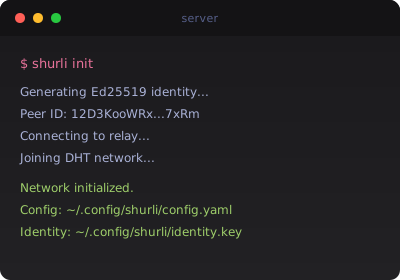
Install
Run the install script. Choose relay server (VPS) or peer node (your device). Identity, config, and service setup handled automatically.
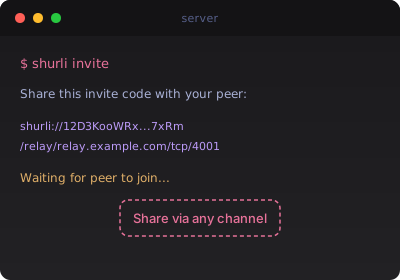
Invite
Run shurli invite to get a one-time code. Send it however you like - text, email, Signal, carrier pigeon.
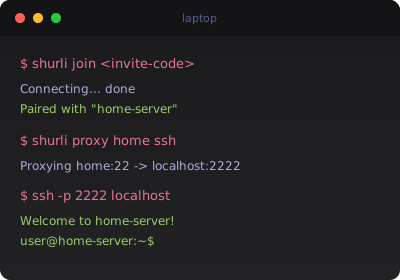
Connect
Run shurli join on your laptop. Both devices trust each other automatically. Access any service through the encrypted tunnel.
From zero to connected in 60 seconds
Deploy a relay, then two commands on each device. No keys to exchange manually, no ports to forward.
Works Through Anything
5G, hotel WiFi, corporate networks, double NAT - if your device has internet, Shurli finds a way through. Tested on the networks that block everything.
One Command, Done
Single binary, no containers, no runtimes, no databases. The install script detects your platform and handles everything. Works offline after pairing.
You Control Who Connects
A simple file on your device decides who gets in. No accounts to manage, no tokens to rotate, no company in the middle. Your network, your rules.
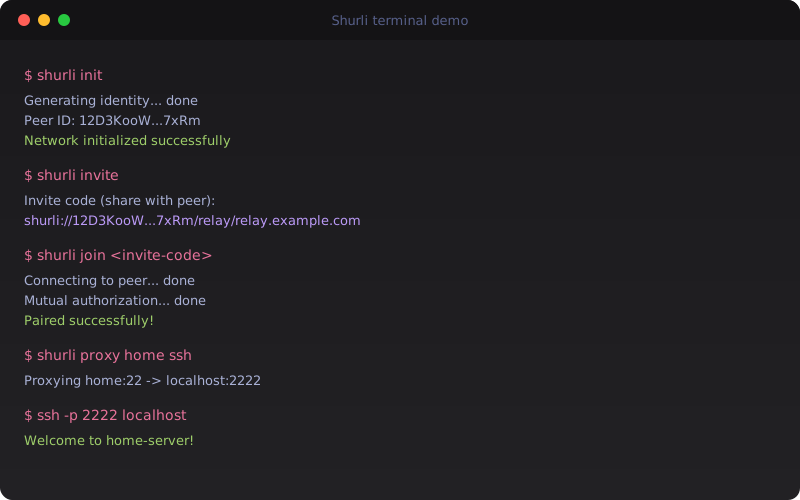
Two Commands to Connect
One command on your server, one on your laptop. Share a code, done. From zero to connected in about 60 seconds.
Access Any Service
Remote desktop, file servers, databases, web apps - anything running on your home network, accessible from anywhere as if you were on the same WiFi.
Stays Connected
Network drops? It reconnects automatically. Bad config? It rolls back. Shurli monitors itself and recovers without you lifting a finger.
Where this is going
Shurli is sovereign P2P infrastructure today. The long-term trajectory is the Zero-Human Network: a network where zero humans are required to operate it. Nodes discover peers, negotiate connections, traverse NATs, and manage trust autonomously.
What connects your devices today is the foundation for what runs autonomously tomorrow.
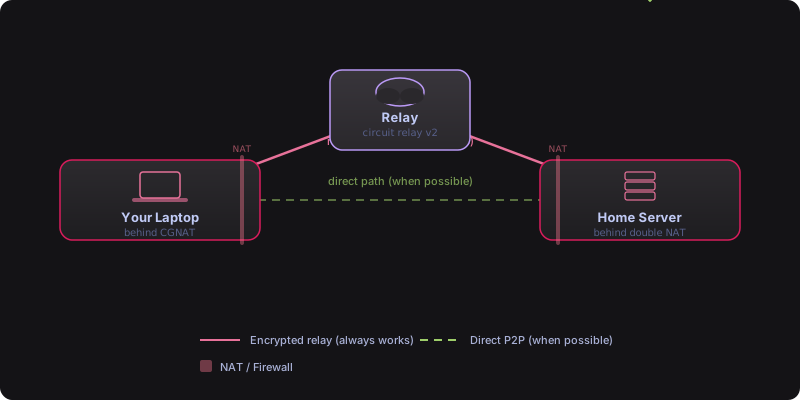
Direct when possible, relayed when necessary
Shurli tries to connect your devices directly. When the network won't allow it, traffic flows through an encrypted relay, which never sees your data.
How Shurli compares
Different architectures make different trade-offs. Here's where Shurli sits.
| Shurli | Centralized VPN Services | Tunnel / Proxy Services | |
|---|---|---|---|
| Account required | None | Yes (vendor) | Yes (vendor) |
| Control plane | None (DHT) | Vendor server | Vendor server |
| Identity | Your Ed25519 keys | Vendor-managed | Vendor-managed |
| NAT traversal | Relay + hole-punching | Vendor relays + STUN | Vendor tunnels |
| Source code | Fully open | Client open, server proprietary | Varies |
| Self-hostable | Everything | Partial | No |
| Data visibility | Zero (relay sees nothing) | Coordination server sees device graph | Tunnel endpoint sees traffic |
Who is Shurli for?
Shurli is opinionated. It's built for a specific kind of user.
- Self-hosters who can't reach their servers from outside
- Privacy-conscious users who refuse vendor accounts
- Home lab operators behind CGNAT or double NAT
- Developers exposing local services (Ollama, databases, web apps)
- Anyone tired of routing through someone else's servers to reach their own devices
- Anyone who wants their network under their own control
- Teams needing a web dashboard and SSO
- Users who want mobile apps (not yet available)
- Organizations requiring full IP-layer VPN
- People looking for zero-config "install and forget"
What's working today
Shurli is experimental, but the core is solid and tested on real networks.
- Encrypted peer-to-peer connections
- NAT / CGNAT traversal via relay
- PAKE encrypted invites
- Daemon mode with auto-reconnect
- SSH, RDP, TCP service proxying
- Zero-knowledge membership proofs
- Self-hosted relay server
- macOS + Linux
- iOS / Android apps
- Windows support
- Plugin SDK
- Subnet routing
Frequently asked questions
How is this different from a VPN?
Do I need to open any ports?
Is my data safe?
What services can I access?
Is it production-ready?
Ready to try it?
curl -sSL get.shurli.io | shor
curl -sSL https://raw.githubusercontent.com/shurlinet/shurli/dev/tools/install.sh | shFor pre-release builds: curl -sSL <URL> | SHURLI_DEV=1 sh