Status, Health Checks, and Scriptable Pairing
Status, Health Checks, and Scriptable Pairing
What’s new
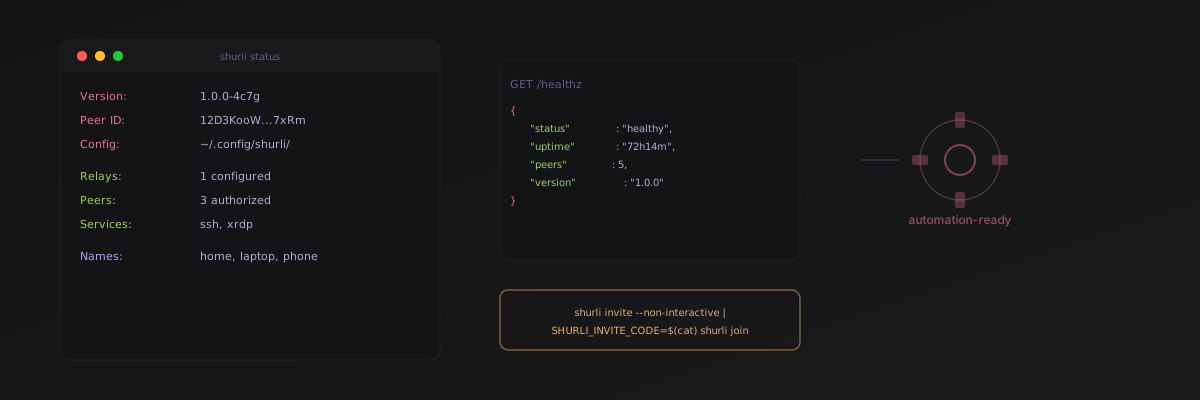
You can now check your node’s status with shurli status, monitor the relay server with a /healthz endpoint, and pair devices non-interactively, making Docker deployments and CI/CD pipelines first-class citizens.
Why it matters
A P2P tool that can’t tell you its own status is a black box. Operators need health endpoints for monitoring. And if pairing requires a human to scan a QR code, you can’t automate deployments. These capabilities close the gap between “works on my laptop” and “production-ready.”
Technical highlights
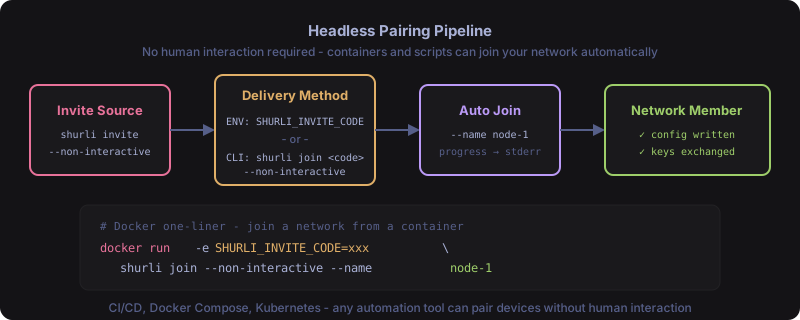
shurli status: Shows local config, services, relay addresses, and peer ID in a clean summary. No daemon required - reads the config file directly/healthzendpoint: HTTP health check on the relay server (default127.0.0.1:9090). Returns status, uptime, and connected peer count. Restricted to loopback for security- Headless invite/join:
shurli invite --non-interactiveprints the bare invite code to stdout (progress to stderr).shurli join <code> --non-interactiveaccepts programmatically. Environment variableSHURLI_INVITE_CODEalso supported - Docker-friendly pairing:
SHURLI_INVITE_CODE=xxx shurli join --non-interactive --name node-1- one line to join a network from a container
What’s next
Full daemon mode with a Unix socket API, turning Shurli into a long-running service with a rich control interface.