80% Coverage and a Security Audit
80% Coverage and a Security Audit
What’s new
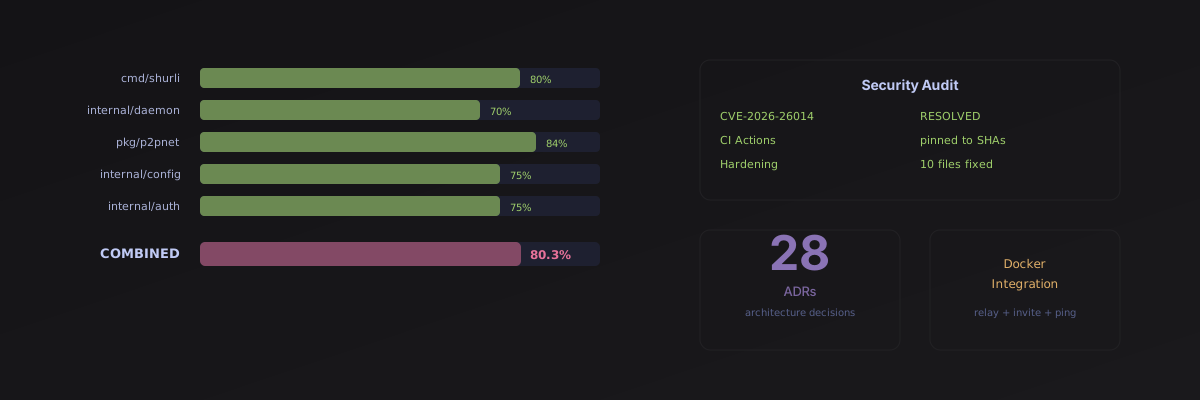
Shurli now has 80.3% combined test coverage across unit tests and Docker integration tests. Every CLI command, every daemon API handler, every config edge case - tested. And a post-phase security audit caught 10 issues, all fixed.
Why it matters
For infrastructure software that handles network connectivity, untested code is a liability. The jump from ~30% to 80% coverage means confidence in refactoring, confidence in releases, and confidence that edge cases are handled. The security audit proved its value immediately: it found a nonce-reuse CVE in a transitive dependency.
Technical highlights
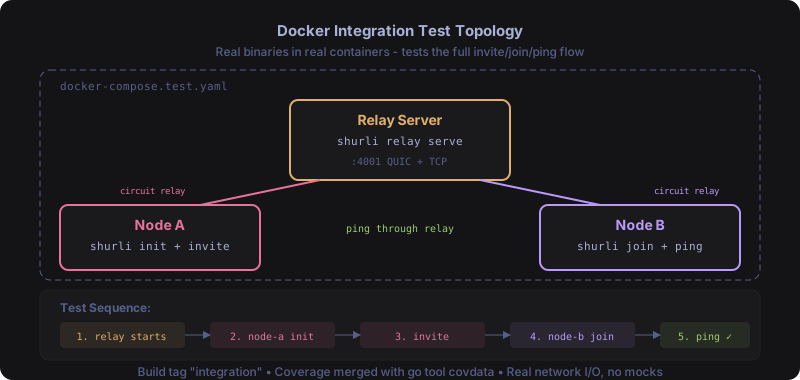
- 80.3% combined coverage: Unit tests (Go’s testing framework) + Docker integration tests (real binaries in containers communicating through relay). Coverage profiles merged with
go tool covdata - Docker integration tests: Compose environment with relay server, two nodes. Tests: relay startup, invite/join pairing, ping through circuit relay. Build tag
integrationkeeps them separate fromgo test ./... - Injectable
osExit: Package-level variable replacesos.Exitin tests, enabling testing of all exit paths without killing the test process - Post-phase security audit found and fixed:
- CVE in pion/dtls/v3 (nonce reuse vulnerability), bumped to v3.1.2
- TOCTOU race on Unix socket permissions, fixed with
umask(0077)duringListen() - Cookie write ordering - cookie now written after socket is secured
- Request body size limits - 1MB cap on all JSON API handlers
- CI action SHA pinning - supply chain hardening
- Config file permission checks - rejects files with mode wider than 0600
- Relay
/healthzhardened - loopback-only, minimal information exposure
What’s next
Observability: OpenTelemetry integration, metrics, and audit logging. Then adaptive path selection for direct connections.